| Highlights from yesterday |
|
Comments |
- The US military says it has disabled an oil tanker attempting to sail towards an Iranian port in the Strait of Hormuz by firing Hellfire missiles.
- The US military also says it has launched another wave of strikes on Iran, with Iranian media reporting explosions on Qeshm Island, Bandar Abbas and Chabahar.
- Iran has launched retaliatory attacks across the Gulf region, with sirens sounding in Bahrain and Kuwait reporting the interception of missiles and drones.
- US President Donald Trump says Iran will be “soon defeated” and downplays the conflict’s impact on global energy prices.
- Iran’s Foreign Ministry says Tehran will commit to the memorandum of understanding signed on June 16 if Washington also abides by it.
|
|
|
Trump indicates US strikes could expand into Iran’s interior
The US Central Command, CENTCOM, says that it is once again striking at targets associated with Iran’s attempts to control the Strait of Hormuz.
These targets typically involve coastguard stations, drone batteries, missile batteries.
These strikes are ongoing now and have been continuing for a number of days.
So, this is something that President Trump says will go on, and he has indicated, too, that it may even extend further than the current range of targets, moving into Iran’s interior, should he not get some kind of deal or some kind of agreement in the next few days.
|
|
|
Iran’s southern islands under threat
US forces have struck Iran’s Qeshm, Kish and Abu Musa islands in recent days as part of an escalating campaign that has also pounded port cities along Iran’s southern coast, including Bandar Abbas.
The attacks have revived a question that has hung over the US-Israel war on Iran since its early weeks: Is Washington preparing to seize Iranian territory?
|
|
|
Trump says diplomacy still possible, but commits to building military pressure on Iran
The US president has said several times this week that he is willing to expand US military action against Iran, not just targeting military facilities – including storage depots, missile launch sites, and vessels that are part of the Iranian navy – but he has also raised the specter of targeting what can be considered civilian targets, such as power plants, bridges, and other parts of Iranian infrastructure.
That is legally very questionable, and has brought criticism against the Trump administration before, earlier in this war.
But Trump says he is committed to making the Iranians actually agree to a deal that will ensure not just US national security but global security as well.
One of the Trump administration’s main tenets is that it does not want to see Iran develop a nuclear weapons arsenal. It also does not want to see Iran continue to carry out what the US calls human rights violations: arresting, punishing, and killing people for expressing political views not in sync with those of the central government in Tehran.
So, while Trump says there is still a possibility for diplomacy, right now, his commitment, he says, is to ratcheting up military activity against the Iranian government.
|
|
|
JD Vance says he was ‘less enthusiastic than others’ about war on Iran
In a lengthy interview released on Wednesday, US Vice President JD Vance spoke to pod caster Joe Rogan about several topics, including Iran and Israel.
Some of his key comments:
- “We are moving in the right direction with Iran, although the process will be complicated.”
- “Destroying Iran’s nuclear sites and its ability to rebuild them was a short-term objective; a lasting solution requires an agreement.”
- “Our immediate strategic priority is keeping the Strait of Hormuz open and securing the free flow of global oil and gas supplies… Securing maritime navigation through military force alone is extremely difficult because cheap drones can threaten ships.”
- “Those who reject negotiations with Iran offer no realistic solution beyond endless and ineffective bombing.”
- “I was less enthusiastic than others about the military campaign, but supported implementing the president’s decision once it was made.”
- “The Middle East cannot be viewed solely as a confrontation between Iran and Israel.”
- “Washington is close to both Israel and the Gulf Arab states, even though they do not always agree.”
- “The era of sending thousands of US troops to overthrow governments is over, and the US military will not determine other nations’ political futures.”
|
|
|
US approves arms sales to Saudi Arabia, Kuwait
The US State Department says it has “made a determination approving a possible” $1.96bn weapons sale to Saudi Arabia and a separate $484m aircraft sustainment package for Kuwait.
In a statement, the department said the proposed Saudi deal includes up to 20,000 Advanced Precision Kill Weapon System guidance sections for air-to-air and air-to-ground use, along with launchers, warheads, spare parts, training and logistical support.
The Kuwait package, it said, covers sustainment and related equipment for C-17 aircraft, including components, maintenance support, software, training and logistics services.
The weapons sales will go through after a congressional review.
|
|
|
IRGC says it downed MQ-9 drone over Andimeshk
Iran’s Islamic Revolutionary Guard Corps (IRGC) says it has intercepted and destroyed an “enemy” MQ-9 drone over the southwestern city of Andimeshk, according to the Tasnim news agency.
The IRGC said the aircraft was brought down by a new air defence system operated by its aerospace force.
|
|
|
Air defense systems activated in Tehran
The Mehr news agency says air defense systems have been activated in Tehran to “counter hostile threats”.
The report comes as the US military announced it launched two waves of strikes on Iran, “targeting Iranian military capabilities used to threaten vessels freely transiting through the Strait of Hormuz”.
|
|
|
Two US strikes hit site near Iran’s Khondab
Two US air strikes have hit a site outside the city of Khondab in Iran’s central Markazi province, the Fars news agency reports, citing the province’s deputy governor.
|
|
|
US forces continue attacks as death toll in Iran rises to at least 35
American strikes have targeted the Iranian southern coast, including different strategic locations.
Explosions where reported in Qeshm Island, the largest island in the vicinity of the Strait of Hormuz, as well as in Bandar Abbas. There are reports about explosions in another important port city for the country, Sirik, which oversees the Strait of Hormuz.
Explosions where also reported in southeastern parts of the country in Sistan province, including Chabahar and Konarak, and also in Rask City.
In Ahvaz, several explosions were reported, in one of which a hospital was targeted, or at least impacted. As a result, it was evacuated, and there are reports about damage to the child cancer treatment hospital.
The Health Ministry also gave the latest casualty figures since the initiation of this recent round of attacks, saying that so far, more than 300 people have been injured and at least 35 people have been killed.
And in return, Iranians are talking about their retaliatory strikes targeting US military sites across the region.
|
|
|
Two explosions heard in Iran’s Khorramabad
The Fars news agency says residents in the western city of Khorramabad have reported hearing at least two explosions.
The city is about 490km (304 miles) southwest of Tehran.
|
|
|
Oil rises for fourth day as US-Iran tensions threaten supplies
Oil prices have risen for a fourth consecutive day after renewed US strikes on Iran raised fears of wider conflict and further disruption to energy shipments through the Strait of Hormuz, according to Reuters.
Brent crude gained 0.4 percent to $85.28 a barrel by 00:26 GMT, while US West Texas Intermediate rose 0.5 percent to $80.02.
Prices have climbed this week as attacks disrupted flows through the strait, which handled about one-fifth of global oil and liquefied natural gas trade before the conflict. Goldman Sachs said Brent could exceed $110 in the fourth quarter if Gulf exports remain constrained.
|
|
|
Trump expresses rare gratitude as Iran releases detained American
Trump is saying that there is still some kind of dialogue going on.
[Speaking in Pennsylvania], he repeated what he said some 24 hours ago, that his people, as he put it, have been talking to their people, implying that there is an avenue of dialogue that exists between the US administration and the Iranian administration.
I must mention this marks a rare expression of gratitude by President Trump to Iran.
Writing on his Truth Social, he’s posted a report saying Iran has allowed an American citizen, who was wrongfully detained in December of 2024, to leave the country.
“She is now safely outside of Iran, and in good condition”. He continues: “The United States of America appreciates this Gesture of goodwill by Iran!”
So, a rare expression of gratitude by President Trump at a time that relations between the US and Iran continue to intensify, as does the ongoing conflict.
|
|
|
US strikes across Iran
The US military has launched hundreds of air attacks across Iran over the past week, killing at least 35 people and wounding 300, according to Iranian health officials.
The US, which has reimposed a naval blockade on Iran, said it targeted military sites along the country’s southern coast and near the Strait of Hormuz, despite a ceasefire agreement.
Iran, meanwhile, carried out attacks on US military facilities across the region, raising fears of a return to all-out war.
|
|
|
US military says latest wave of strikes on Iran completed
US Central Command says it has completed its latest wave of strikes against Iran.
CENTCOM said US forces “struck Iranian command centres, air defence sites, missile and drone capabilities, and coastal surveillance facilities” with the aim of degrading Iran’s ability to threaten shipping in the Strait of Hormuz.
The military said it used “precision munitions to hit targets in multiple locations including Bandar Abbas”.
It added that US forces struck coastal defence and cruise missile sites on Greater Tunb Island during a 90-minute operation earlier on Wednesday.
|
|
|
Air defenses activated in Tehran, Pakdasht
Sounds of activation of the air defense system in the Iranian capital, Tehran, where reported.
Local authorities in Pakdasht are also reporting sounds related to the activation of the air defense system. There are unconfirmed reports [of explosions] coming from Parchin. The Fars news agency says that in Semnan and Khorramabad, sounds of explosions have been heard.
The IRGC came out to say that in the city of Andimeshk, in Kuzestan province, its air force downed an MQ-9 belonging to the enemy.
Earlier tonight, explosions taking place along the southern coasts of the country, including Bandar Abbas, Qeshm Island, Sirik, and Konarak.
|
|
|
Iran claims attack on US forces at Kuwait’s Ali Al Salem base
The Islamic Revolutionary Guard Corps says it carried out a combined missile and drone attack on Ali Al Salem Air Base in Kuwait.
In a statement carried by the IRIB broadcaster, the IRGC said it targeted a C-RAM early-warning radar and a gathering point for US soldiers during the eighth wave of its “Nasr 2” operation.
It also accused the US of using Kuwaiti territory to launch attacks against Iran and called on Kuwaitis to demand the removal of US forces from the country.
|
|
|
Iranian doctor says US strike damaged children’s cancer hospital
Iranians are inspecting the damage from days of US strikes on key cities in the country’s south and west. Residents say attacks have damaged ports and at least one hospital.
|
|
|
US motives to attack Greater Tunb Island
Greater Tunb, Lesser Tunb and Abu Musa are three important islands in the Strait of Hormuz. There are controversies about Iran trying to assert sovereignty over these three islands.
Like other islands in the vicinity of the Strait of Hormuz, such as Qeshm Island, their significance lies in the very fact that whoever controls those islands has an upper hand when it comes to control and authority over the Strait of Hormuz. Iran has time and again put emphasis on its authority and control over the straits.
Militarily speaking, these islands are important as they also host Iranian military infrastructure. They are part of a layered defense system, and Greater Tunb can be considered as a forward military outpost, which again adds another layer of significance to the island.
All in all, Iran is trying to flex its muscles over the Strait of Hormuz. They are talking about a new management coordinated with the Omani side, and they are saying that ships and vessels are now not allowed to transit through this geostrategically significant chokepoint.
|
|
|
Iran claims drone attack on ‘US facilities’ at Jordan’s Azraq base
Iran’s army says it targeted communications systems, a fixed radar site and fuel depots of the US military at Jordan’s Azraq Air Base using attack drones.
In a statement carried by the Fars news agency, the army said the attack formed the ninth phase of its “Saeqeh” operation and was launched in response to recent attacks on Iran, including a strike on the Bampur barracks in Iranshahr that it said killed seven soldiers.
|
|
|
About the latest round of attacks between the US and Iran
- The US military says it has completed another wave of strikes against Iran, including in Bandar Abbas and Greater Tunb Island, to degrade the country’s ability to threaten shipping in the Strait of Hormuz.
- Iranian media reported explosions on Qeshm Island and the cities of Bandar Abbas, Sirik, Chabahar, Konarak and Rask. US air strikes also hit the central city of Khondab, while residents in the western city of Khorramabad reported hearing two explosions.
- Air defense systems were also activated in the capital, Tehran, and nearby Pakdasht.
- Iran’s army and the IRGC, meanwhile, claimed retaliatory attacks on US forces in Kuwait and Jordan, and said that an MQ-9 drone was downed over the Iranian city of Andimeshk. Sirens have sounded in Bahrain, too.
- Earlier, the US military – which has reinstated a blockade on Iranian ports – said it carried out a missile attack on a tanker heading to an Iranian port and redirected two other ships.
- At least 35 people have been killed and more than 300 wounded in the ongoing US attacks, according to Iran’s Health Ministry.
|
|
|
US-Iran escalation makes mediators’ work ‘more and more difficult’
As the US continued to carry out strikes on Iran, Iran carried out retaliatory strikes – on Wednesday and into early Thursday morning – against neighboring Gulf Arab states hosting thousands of US military personnel.
Iran said those attacks were valid because it was targeting US assets, while Gulf Arab states are condemning Iran, saying the attacks violate international law.
Kuwait, Jordan, and Bahrain all came under attack on Wednesday.
Kuwait said that it intercepted four cruise missiles and 21 drones from Iran on Wednesday and into early Thursday morning.
Kuwait and Bahrain both said that they were continuing to confront hostile projectiles coming towards them from Iran, with air raid sirens and warnings going off in those countries.
This is making the task of mediators much more difficult.
As long as the US continues to carry out strikes on Iran, and as long as Iran continues to retaliate against US assets in neighboring Arab countries, the work of mediators becomes more and more difficult.
|
|
|
Air strikes hit airport in Iran’s Semnan
The IRIB reports that parts of Semnan airport have been targeted in “enemy air strikes”.
It cited a spokesperson for the north-central province’s crisis headquarters.
The spokesperson said emergency services were responding and that no residential areas in Semnan’s cities or villages had been struck.
|
|
|
IRGC says no casualties in Pakdasht and Parchin
The Islamic Revolutionary Guard Corps says the sounds of explosions reported in the city of Pakdasht, near the capital, Tehran, were caused by air defence operations.
It said there were no casualties in Pakdasht or in Parchin, an Iranian military complex near Tehran.
|
|
|
Jordan says it downed eight Iranian missiles
Jordan’s armed forces have intercepted eight Iranian missiles targeting the kingdom, according to the Petra news agency.
Citing a military source, the agency said the interceptions caused no casualties or material damage.
The source said Royal Engineering Corps teams secured debris that fell at several locations and “emphasized that the armed forces continue to monitor the airspace with the highest level of readiness”.
Earlier, Iran’s army said it targeted communications systems, a fixed radar site and fuel depots of the US military at Jordan’s Azraq Air Base using attack drones.
|
|
|
Strait of Hormuz traffic has slowed ‘to a trickle’: Lloyd’s List
“Non-Iranian shipping has virtually disappeared” in the Strait of Hormuz amid renewed US-Iranian fighting in and around the strategic waterway, Lloyd’s List, a maritime trade publication, reports.
The owners of ships still attempting to cross the embattled waterway have resorted to “dark transits”, sailing without transponders that communicate their position, it added.
Lloyd’s List also reported that the renewed US blockade on Iranian ports is “intensifying US-backed plans to revive the Iraq-Syria Kirkuk-Baniyas pipeline”.
|
|
|
No casualties in attack on Semnan airport, IRIB reports
The IRIB broadcaster, citing a top security official, said there were no deaths or injuries from the attack. It said a “side shed” was hit and that part of the windows of the airport building collapsed.
Semnan is located about 179km (111 miles) east of the capital, Tehran.
|
|
|
Iran says will continue attacks on US ‘offensive infrastructure’
Iran’s air defense systems have been activated over Tehran, with similar reports coming from Pakdasht and Parchin, both near the capital.
Further east, attacks have been reported in Semnan, where local authorities say parts of the airport were damaged in strikes. Explosions have also been reported in Khorramabad.
In Khondab, in the central Markazi province, fresh attacks have been reported. This is not the first time the area has been targeted, and the location is significant because Khondab hosts one of Iran’s heavy-water facilities.
In southwestern Iran, the Islamic Revolutionary Guard Corps (IRGC) says it intercepted and downed a US MQ-9 drone over Andimeshk in the Khuzestan province.
The latest developments follow reported US strikes along Iran’s southern coast. Several explosions were reported on Qeshm Island and in the port city of Bandar Abbas. Attacks were also reported in Sirik, which overlooks the Strait of Hormuz, and in Konarak in southeastern Iran.
At the same time, Iran says its retaliatory operations are continuing. An IRGC spokesperson said the current focus was on destroying US “offensive infrastructure” across the region and suggested further phases could follow.
The IRGC has also issued statements claiming attacks on several US military bases in the region.
|
|
|
Iran tells Houthis to close Red Sea gateway if US hits power network
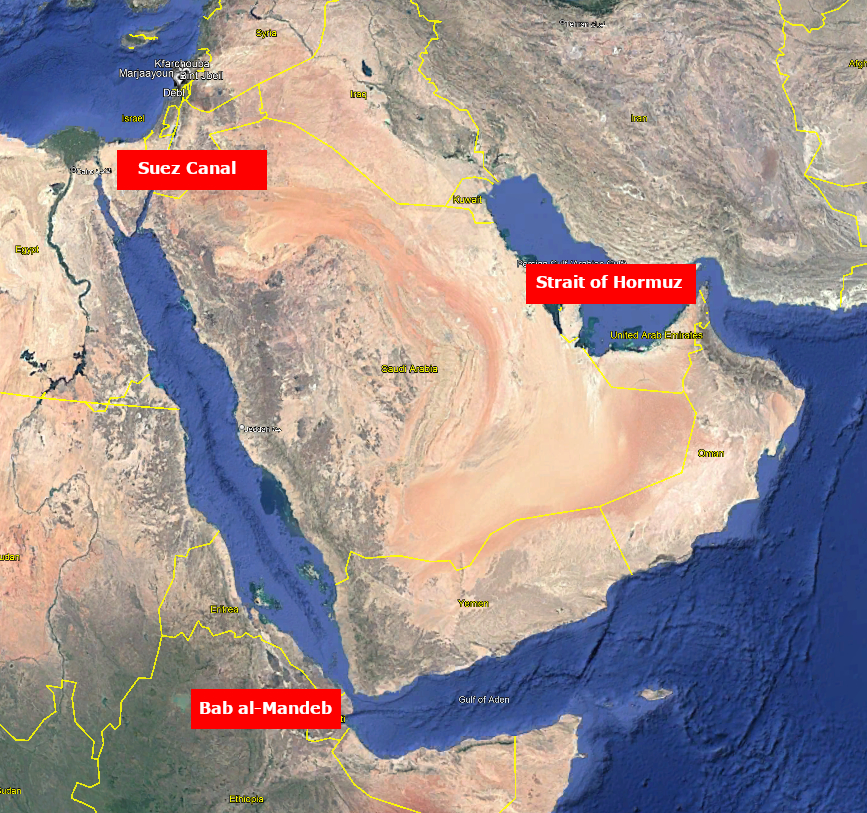
Iran has asked Yemen’s Houthi movement to stand ready to close the Red Sea oil route if the United States strikes Iranian power infrastructure, three sources told Reuters on Thursday, posing a potent new threat to global energy supplies.
The idea has been discussed within the Islamic Republic's leadership, and the message has been conveyed to Iran's Houthi allies, two senior Iranian sources and a regional source familiar with the matter said, speaking on condition of anonymity.
|
|
|
Who is calling the shots in Iran amid the deadly war with the US?
According to the US, Iran’s authorities are fighting among themselves.
“Nobody knows who is in charge, including them,” US President Donald Trump claimed in late April, after a ceasefire was only able to temporarily scale down military operations.
“They have no leaders left. We don’t know who the leaders are. Nobody knows who the leaders are – I don’t think they know who the leaders are,” he later added.
With Iran and the US moving farther away from a negotiated resolution nearly five months after the start of the war, Washington is attempting to project the image of a confused Iranian leadership, one struggling for coherency after the assassination of former Supreme Leader Ali Khamenei and other senior officials during the conflict.
But that is a portrayal that Iranian authorities have categorically rejected.
|
|
|
Iran claims attacks on Bahrain, Kuwait
Iran’s army says it targeted US radar and defense systems in Kuwait and Bahrain a few hours ago, as part of the tenth phase of its retaliatory attacks, dubbed Operation Lightning.
In a statement carried by state media, the army said it targeted radar systems, the Patriot defense system, and fuel tanks belonging to US forces at the Ali Al Salem base in Kuwait.
In a separate wave of attacks, the army said drones targeted communication and radar systems, including Super Hawk radars and Patriot installations, used by US forces at the Sheikh Isa base in Bahrain.
Earlier, the IRGC also claimed attacks on Kuwait, saying it targeted a C-RAM early-warning radar and a gathering point for US soldiers at Ali Al Salem airbase.
|
|
|
Some 211 patients evacuated from Ahvaz hospital
The IRIB broadcaster has identified the facility as the Shahid Baghaei Hospital and said that some 211 patients were transferred to other medical centers following the attacks.
|
|
|
US attacks northern Iran for second time in a week
Last week, the US attacked northern Iran for the first time since the memorandum of understanding was signed, or indeed, after the ceasefire was reached on April 8.
The first strike was in Aqqala, where a railway bridge was attacked.
That bridge is quite important for Iran’s trade routes, particularly given that there is a blockade and Iranians cannot sell their oil to the global market. So these alternative trade routes are important, and that was perhaps the justification back then.
Now, the northern city of Semnan has come under attack.
This is the second time in one week that we’re hearing that the US is attacking the north of the country. In Semnan, the main building of a civilian airport was attacked by US forces, and there are no further details.
Iranian officials are not saying exactly what happened, but they say there has been minor damage at the airport. A storage facility in the same city was also hit. We do not know what was stored there, so no details about that either.
|
|
|
US forces attacked Iran’s Hamadan province overnight
The IRIB state broadcaster is reporting an “enemy attack” in Kabudarahang county, in the western Hamadan province.
Quoting a top official, IRIB said several locations came under attack and that no casualties were caused.
Earlier, Iranian media reported attacks on the northern city of Semnan and said air defenses were also activated in Tehran.
|
|
|
IRGC claims missile attack on Jordan airbase
Earlier, the Iranian army claimed that it had carried out drone attacks on Jordan’s Azraq airbase.
The IRGC is claiming missile attacks on the same base.
In a message addressed to the Jordanian people, the IRGC said its forces “targeted and destroyed the American fighter jet storage ramp and the new American command and control centre in West Asia in a very large base in Al-Azraq, Jordan, with Khyber-Shakan ballistic missiles”.
It said the strikes were in retaliation for US attacks that forced the evacuation of 121 children with cancer in Ahvaz, as well as US attacks in March that killed 168 children at a school in Minab.
It urged the Jordanian public not to allow their land to be used “for these crimes against children”.
The IRGC statement came after the Jordanian military said it intercepted eight Iranian missiles this morning.
|
|
|
‘No power in the world can take Hormuz from Iran’s ownership’
Ali Akbar Velayati, a former Iranian foreign minister and adviser to the supreme leader, has told Iran’s state TV that the Strait of Hormuz belongs to Iran.
“No power in the world can take the Strait of Hormuz from Iran’s ownership,” he said.
The former top diplomat added: “This strait has been brought under Iranian sovereignty by the courageous and wise command of the Supreme Leader, Ayatollah Seyyed Mojtaba Khamenei (may Allah protect him), as a valuable achievement of the 40-day war.”
The US launched a new wave of strikes against Iran with the stated aim of curbing its ability to threaten shipping in the Strait of Hormuz, after Tehran attacked tankers using an alternative route in the key waterway in recent days. In response, Iran has been launching attacks on what it says are US targets in the Gulf, including in Bahrain and Kuwait.
|
|
|
Iran claims drone and missile attacks on Kuwait
The IRGC has issued a new statement on its attacks on Kuwait.
It said its forces “targeted and destroyed the satellite communications centre and early warning radar of the US air base in Ali Al Salem and the US military pier in Ash-Shu’aybah with a combined drone and missile operation”.
It said the attacks were in response to US attacks on the children’s cancer hospital in Ahvaz as well as a bottled water factory in the Khuzestan province.
It urged the people of Kuwait not to let the “enemy use your land to commit aggression and crimes against the people of Palestine, Lebanon, Iran, and Yemen”.
It also called for the expulsion of US forces from the region and added, “The opening of the Strait of Hormuz is conditional on the end of America’s evils in the region.”
The statement comes after Iran’s army said it carried out drone attacks on Ali Al Salem Air Base, targeting radar systems, the Patriot defence system, and fuel tanks belonging to US forces. Earlier, the IRGC had also claimed attacks on a C-RAM early-warning radar at Ali Al Salem.
|
|
|
Iran threatens to ‘crush’ regional infrastructure if US attacks Iranian infrastructure
Brigadier General Ebrahim Zolfaghari, spokesman for Iran’s Khatam al-Anbiya Central Headquarters, has threatened to respond to any US attacks on Iranian infrastructure with strikes on regional infrastructure.
In a statement carried by Iranian state media, he said if Trump follows through on his threats, “all the infrastructure in the region will be crushed under the steel blows of the powerful armed forces of the Islamic Republic of Iran, so that no trace of them will remain, as if they had never existed in the first place.”
He also said Iran will not allow US interference in the Strait of Hormuz.
“Under no circumstances and in no way will we allow America, as a foreign and extra-regional country, to interfere in the Strait of Hormuz. This is Iran’s invincible red line,” he said.
|
|
|
Iran claims more attacks on Bahrain
Earlier, the Iranian army said it launched drone attacks on Bahrain’s Sheikh Isa Air Base, targeting communication and radar systems, including Super Hawk radars and Patriot installations used by US forces.
Now, the IRGC says it launched a “devastating attack” on the same base and “completely destroyed the air reconnaissance and control radars” as well as “the fuel tank pumping station of the aggressor enemy’s fighter jets”.
The IRGC says the attacks were in response to the US attacks that forced the evacuation of the children’s cancer hospital in Ahvaz as well as a water production plant for Karbala pilgrims in the border area of Ilam province.
“The battle continues,” it added.
The statement comes moments after the IRGC also claimed further attacks on Kuwait and Jordan.
|
|
|
Economist/YouGov Jul 10-13: Iran
% who think in hindsight, the decision to go to war in Iran was right | wrong
U.S. adult citizens 27% | 57%
Democrats 5% | 89%
Independents 13% | 65%
Among Republicans
Overall 63% | 16%
MAGA 77% | 5%
Non-MAGA 31% | 51%
|
|
|
India tells ship-owners not to deploy Indian seafarers on Hormuz routes
The Directorate General of Shipping in India has told ship-owners, ship managers and recruitment companies “to avoid deploying Indian seafarers on vessels undertaking voyages through the Strait of Hormuz until further orders”.
The order came after two Indian sailors were killed in Iranian attacks on two ships in and around the Strait of Hormuz this week.
“In view of the heightened security situation in the Persian Gulf region … the Directorate considers it necessary to adopt enhanced precautionary measures to safeguard the interests of Indian seafarers serving on board ships operating in the region,” the order added.
The UN said last month that at least 14 seafarers had been killed in attacks in and around the Strait of Hormuz since February 28, when the US-Israel war on Iran began. They include three Indian crew members who were killed in a US attack on the Settebello oil tanker off the coast of Oman on June 9.
|
|
|
Iran threatens to expand attacks to ‘new arenas’
Iranian army spokesman Mohammad Akraminia has warned attacks “will spread to new areas” if the United States continues its strikes.
“If US aggression continues, the war will be expanded to new arenas,” he said in a post on Telegram.
“A significant portion of the armed forces’ capabilities have not yet been demonstrated. Should any hostile actions against the country continue, Iran’s response will be commensurate with the circumstances and exceed the enemy’s expectations, opening new arenas of confrontation.”
|
|
|
Iran has ‘no intention of confronting neighboring nations’: Spokesman
An Iranian military spokesman says Tehran doesn’t want to confront its Middle East neighbors, despite another army official earlier pledging to “crush” regional infrastructure if the US hits civilian sites in Iran.
“Iran has no intention of confronting its neighboring countries or the Islamic nations of the region. It has consistently emphasised expanding cooperation and fostering fraternal relations with regional states,” said army spokesman Mohammad Akraminia.
“The armed forces regard the protection of the Iranian nation’s security, interests, and dignity as their foremost mission, and they will spare no effort in fulfilling that responsibility,” he added in a statement.
“Countries from outside the region should engage with Iran on the basis of mutual respect. Iran’s Armed Forces are fully prepared to safeguard the country’s security and national interests.”
|
|
|
Bahrain says it thwarted ‘sinister attacks’ by Iran
Bahrain’s army says Iran is “continuing its systematic hostile approach through its sinister attacks targeting civilians” in the Gulf country.
“The General Command clarifies that, with strong will and high combat readiness, the air defense systems detected, intercepted and destroyed a number of treacherous Iranian air strikes today,” it said in a statement.
The army urged “everyone to exercise caution and avoid approaching any unfamiliar or suspicious objects resulting from the remnants of the brutal Iranian aggression”.
Earlier, the Iranian army claimed an attack on Bahrain’s Sheikh Isa Air Base, saying it was in response to the US strikes.
|
|
|
Oil prices ease as traders analyze impact of US attacks on Iran
Oil prices have eased as traders assess the risks from the new wave of US strikes on Iran that stoked fears of renewed full-scale war and supply disruptions in the Strait of Hormuz.
Brent crude, the primary international benchmark, fell by 44 cents, or 0.52 percent, to $84.51 a barrel as of 06:05 GMT. Oil prices had spiked earlier this week after the deadly tit-for-tat attacks this week.
|
|
|
Mediator Pakistan pressing US and Iran to resume talks
Pakistan says it will push the US and Iran to stop fighting and resume talks under the memorandum of understanding (MoU) signed last month.
“While the implementation of the MoU is facing challenges, Pakistan will continue to encourage all sides to end violence and resume technical-level talks,” Tahir Andrabi, a Foreign Ministry spokesperson, told reporters in Islamabad.
Since the war began on February 28, Pakistan has played a key role as mediator. It hosted talks in April, the first time in four decades that US and Iranian officials sat in a room together.
In June, it helped produce the interim deal signed by Iran’s President Pezeshkian and Donald Trump, along with Pakistani Prime Minister Shehbaz Sharif. That was then discussed at the Burgenstock summit in Switzerland.
|
|
|
Final exams for students in Iran’s south postponed during US strikes
The final exams of graduating high school students in the Iranian provinces of Hormozgan, Bushehr, Khuzestan, and Sistan and Baluchestan have been postponed because of ongoing American attacks and threats of escalation.
The country’s Education Ministry said final exams in other provinces will continue as normal.
President Trump has said the United States is going to bomb Iran’s civilian infrastructure if there is no deal by next week. But the US is already bombing sites all along Iran’s southern coastline with communities there bearing the brunt.
|
|
|
Iranian officials reiterate ‘permanent control’ over Hormuz Strait
Iranian officials have said the Strait of Hormuz is “a red line” since the beginning of the US-Israel war on the country. Brigadier-General Ebrahim Zolfaghari’s statement today is a reiteration of that.
But the timing here is important because the president of the US frequently speaks about attacking Iran’s energy infrastructure.
The military headquarters says if the US carries out more attacks on Iranian infrastructure, then Iran also is going to attack the infrastructure around the region. So far, the reason Iran hasn’t done that is not because of a lack of capability, but rather a policy of restraint. But that policy of restraint will come to an end if the US launches such attacks, it says.
Last night, Iran’s chief negotiator and Parliament Speaker Mohammad Bagher Ghalibaf said Iran’s national security hinges on maintaining “Iranian arrangements” in the Strait of Hormuz and “the enemy” is now seeking to undermine that by force.
So Iranians are not talking about temporary control over Hormuz, but rather their message to the world is Iran aims to have permanent control and sovereignty over the strategic waterway. And that is the main source of tension between Tehran and Washington.
|
|
|
Former US ambassador says Iran miscalculated Trump’s resolve
Daily strikes between the US and Iran in the Gulf have been the heaviest since the memorandum of understanding was signed about a month ago.
David Hale, a former US ambassador, says Tehran has miscalculated in thinking US President Trump would back down.
|
|
|
The fighting between Tehran and Washington
The US military has continued strikes against Iran, hitting targets further to the country’s north as well as close to the capital, Tehran, for the first time in the latest round of violence.
US Central Command (CENTCOM) said it struck several military sites and assets in a bid to “further degrade Iran’s ability to threaten innocent mariners” in the Strait of Hormuz. The unit also said it “disabled” an oil tanker in the waterway.
At least 35 people have died, and more than 300 have been wounded in Iran in the latest wave of attacks that began last Wednesday.
|
|
|
Hundreds of patients flee as US bombs near Iran cancer hospital
More than 200 patients from the Baghaei Specialized Hospital have been evacuated following deadly US strikes on southern Iran.
Hospital Director Reza Bazar said American attacks on Ahvaz city put the hospital out of service, Fars news agency quoted him as saying. There were no reports of casualties.
Dr Majid Bou’azar, manager of the hospital, said that 211 patients “were forced to relocate” because of the strikes.
“These are special patients, including cancer patients, who are hospitalized here. Unfortunately, the area around here has been bombed heavily. Some of the patients [were] on oxygen and ventilators,” a staff member said.
“Some people had children in their arms, some had IVs in their hands and some were in wheelchairs. Everyone went outside.”
|
|
|
Iran condemns ‘barbaric’ US attack after cancer hospital evacuated
Iran has accused the United States of carrying out a “barbaric attack” after a cancer hospital in Iran’s southwest was forced to evacuate because of nearby heavy air strikes.
“This barbaric attack – reminiscent of Israel’s atrocities against healthcare facilities – caused severe suffering and anxiety upon the hospitalized children,” Foreign Ministry spokesman Esmaeil Baghaei posted on X.
He noted “211 patients undergoing chemotherapy” were evacuated. There was no immediate US response.
|
|
|
Iran and US put down ‘red lines’ over Hormuz but ‘limitations’ exist
Cyrus Schayegh, a professor of history at the Geneva Graduate Institute, says the 40-day war launched by the US and Israel on Iran “created a more even balance of power” in the Middle East.
“Iran basically won strategically but is not more powerful, but more or less evenly powerful with the US in the Strait of Hormuz right now,” Schayegh said.
“For this reason, Iran wants to keep the situation as it is, but the United States over wants the old power it had back … This explains why both sides are trying to put down red lines. This has an escalatory dynamic built into it, and I do believe we’ll see more of an escalation.”
However, he added, at the same time there are limitations “and perhaps the most important one are the Arab states in the Gulf who want to pressure Trump to basically stop escalating”.
Another limitation is the US domestic scene with not only Democrats but also Republicans “getting uneasy” with midterm congressional elections fast approaching, said Schayegh.
|
|
|
Gulf nations heighten security around critical infrastructure
In this time of uncertainty, many Gulf countries have been preparing for any possible scenario by strengthening air defenses.
They have also increased military preparedness and tightened security around crucial infrastructure, including oil and gas facilities, airports, and desalination plants.
Bahrain this morning said it intercepted a large number of drones and missiles coming from Iran with similar statements coming from different countries across the region.
But any air defense system is not going to last long so there is still concern that any wider conflict could damage critical infrastructure. That’s going to cause a lot of issues for regional security but also the global economy.
So that’s why countries in the region are trying to put all the warring sides together and promote dialogue to end this conflict and find a solution.
|
|
".. and tightened security around crucial infrastructure .."
Previously added to this page:
Iran threatens to ‘crush’ regional infrastructure if US attacks Iranian infrastructure.
|
Kuwait military responding to new Iranian drone attacks
Kuwaiti air defenses are currently confronting attacks by “hostile drones” as strikes on the US’s Gulf allies continue.
“The General Staff of the Army notes that any explosion sounds heard are the result of air defence systems intercepting the hostile attacks,” the military said in a statement on X, denouncing “the sinful Iranian aggression”.
“Everyone is requested to adhere to the security and safety instructions issued by the competent authorities,” it added.
|
|
|
Majority of Americans believe launching war on Iran was wrong, poll finds
A new public opinion survey by YouGov and The Economist suggests that 57 percent of Americans believe the decision to launch the war on Iran was wrong, while only 27 percent say it was the right decision.
Some 46 percent of Americans also believe the war will last another year or more, the poll suggested.
The share of respondents who say the war will end within a month, or is already over, has fallen to 8 percent from 20 percent in March, the poll showed.
|
|
|
VP Vance slams Israeli effort to thwart peace talks with Iran
Vice President JD Vance has accused Israel of funding campaigns aimed at ruining US negotiations with Iran to end the war.
“You have seen this very discreet, extremely well-funded campaign to try to derail the negotiation and try to derail the deal,” Vance told the Joe Rogan podcast.
“A bunch of people who have quite literally been paid by a former Trump campaign person who was himself paid by certain elements within the Israeli government. And those people are attacking me viciously,” he said.
There was no immediate response from Israeli officials to the allegation.
|
|
|
Vance’s Israel comments show ‘great division’ in US leadership
The US vice president’s public call-out of Israeli lobbying efforts to derail a US peace deal with Iran reflects growing tension between the staunch allies after their war failed in its intentions, an analyst says.
“Vance has a personal interest, of course, in making these statements, which are true by the way. … Vance has presidential ambitions going forward,” said Cyrus Schayegh from the Geneva Graduate Institute.
He said that the comments also show “there are great divisions between the US establishment about how to deal with Iran”.
There are “old-fashioned conservatives who want to be more aggressive” but, on the other side, are Vance and others who “want to get to some sort of agreement”, Schayegh said.
“Trump, I think, could be brought over,” he noted. The “maximum alignment between Israeli and US policy” that began when Trump started his second term at the beginning of 2025 may be fraying, he added.
Netanyahu convinced Trump on the regime change war on Iran but, “now that things aren’t going well, we see more and more people starting to object,” Schayegh said.
|
|
|
Vance’s Israel remarks expose divisions within Republican Party
There’s a growing split within the Republican Party. Israel’s influence campaign over Iran talks is meant to influence Trump’s MAGA base.
So that explains why Vice President JD Vance went on the Joe Rogan pod cast. He’s one of the most popular pod casters in the country and is very much a key voice in influencing the young men that make up the MAGA base.
For JD Vance, a sitting vice president, to go in public and accuse Israel of a “secret campaign” – that is unheard of.
Also unheard of is half of the Democratic Party voting to end aid to Israel. If you asked any Washington insider two years ago if this vote would happen, they would have said absolutely not. But it is a clear shift in the Democratic Party. Of the 212 Democrats in the House of Representatives, 103 voted yes to get rid of $3.3bn worth of funding that Israel gets from the United States every year.
Just one Republican voted along with the Democrats, so what’s interesting here is what’s going to come from Donald Trump. We do believe he had a phone call last week with Israeli Prime Minister Benjamin Netanyahu where he said it’s time for Israeli forces to leave Lebanon and Syria. Then we’ve heard the Israeli defence minister come out and say they’re not leaving.
So how is the White House going to react to what seems to be a complete rebuke of the president’s wishes?
|
|
|
Vance’s rebuke of Israel reflects ‘structural change’ in relations
A former Israeli ambassador to the United States says Vice President JD Vance’s public comments against Israeli efforts to torpedo US-Iran negotiations are “unprecedented in their severity”.
“No sitting US vice president has ever accused Israel of openly running a campaign to undermine American policy,” Alon Pinkas, a columnist at The New Republic, said.
“There have been disagreements in the past, there has been friction. But for a sitting vice president to come out so vociferously, clearly, and crudely against an Israeli influence campaign against the US is truly unprecedented … It is quite shocking.”
The incident shows the US and Israel “are not on the same page” right now, Pinkas added.
The growing friction over the war on Iran between the allies is “very worrying from an Israeli point of view” and reflects a “structural change” in their relations, he added.
|
|
|
Vance comments on Israeli influence campaign ‘very diplomatic’
What he’s referring to is an official Israeli government campaign to influence opinion in the United States, specifically Trump’s MAGA base, to the tune of $730m.
That is more than five times what Israel spent on the same task in 2025.
At the beginning, according to Israeli and American reporting, the campaign focused on support for Israel, on countering the narrative about Israeli crimes during the genocide in Gaza, and then it developed into trying to justify the attack on Iran to dispel the accusations against Israel of having pushed the US into that war.
Then it devolved into attacks on those in the US administration trying to end the war with the memorandum of understanding (MoU).
That went into a full-fledged attack once the MoU was reached, and the main target really was the US vice president because he was put in charge of it.
That’s the reference that JD Vance is making, and the Israeli media has been reporting extensively on the matter, on the trouble that this will create for Prime Minister Benjamin Netanyahu and for Israel in the coming months.
|
|
|
Vance says Israeli campaign tried to sway US opinion against Iran diplomacy
The US vice president has accused some members of Israel’s government of trying to influence US public opinion to oppose a deal to end the war with Iran.
In remarks made during an interview with US podcaster Joe Rogan that aired on Wednesday, Vance offered unusually pointed criticism of one of Washington’s closest allies.
Vance defended a deal the US reached last month to end the war with Iran, adding: “I know beyond a shadow of a doubt that there have been people within the Israeli government who are trying to, like, actually shift us away from that policy because they want to continue the military campaign.”
|
|
|
Vance cites ‘well-funded’ campaign from Israel to undermine Iran deal
Vance says “extraordinarily well-funded” efforts are seeking to derail negotiations with Iran. Vance said funding from Israel is being channeled to influencers via sources once close to the Trump administration.
|
|
|
US-Iran war: Russia decries ‘negative consequences’ for global economy
Russia is in touch with Iranian officials regarding the ongoing escalation with the US, Kremlin spokesman Dmitry Peskov says.
“All of this is fraught with continuing negative consequences for the global economy, which cannot but cause concern,” Peskov said, calling the economic situation “rather dire”.
Peskov gave no details of the contact but told reporters that Iranian authorities have not requested a phone call with President Vladimir Putin.
Russia has called on Iran and the US to refrain from escalation.
|
|
|
Oil rises over 1% as Iran threat puts Red Sea route at risk
Oil prices rose by more than one percent as concerns over energy supplies increased after the US war on Iran war escalated and Tehran asked Yemen’s Houthis to stand ready to close the Red Sea oil route.
Brent crude futures were up 93 cents, or 1.09 percent, to $85.88 a barrel at 13:20 GMT, while US West Texas Intermediate futures were up 89 cents, or 1.12 percent, to $80.49 a barrel.
“Simultaneous disruptions affecting Hormuz and Bab al-Mandeb would significantly amplify supply chain stress, increase tanker availability constraints and raise insurance premiums,” said Wael Makarem, financial markets strategist lead at Exness.
Iran asked Yemen’s Houthi movement to prepare to close the Red Sea oil route with attacks if the United States strikes Iranian power infrastructure, three unnamed sources told the Reuters news agency.
|
|
|
Iran ‘willing to take a lot of pain’ in war with US
Iranian strategic objectives in the conflict are straightforward – to survive, says Alex Alfiraz Scheers, a London-based defense analyst.
“It’s demonstrated that it can do that because it’s willing to take a lot of pain. So the more that the United States strikes Iranian targets, it really won’t stop the regime from retaliating because it’s fighting for its survival,” Scheers said.
Tehran’s second objective is to rebuild and thirdly to reorient the regional balance of power in its favor, he added.
“Now for both of those phases, … it does need to be able to demonstrate that it can control the Strait of Hormuz because it’s its biggest source of leverage.”
The US strategic objectives, meanwhile, are not quite clear, the analyst said.
“Remember that at the outset of the conflict, it was supposed to be the end of the Iranians’ nuclear weapons program. We’re nowhere near that.”
Still, as long as the US has a large military presence in the Gulf, it remains a “very potent” threat to the Iranians, Scheers said.
It will be hard for someone such as Trump, who sees himself as a “master salesman”, to sell the notion to his base before the midterm elections in November that the US has won the war and the conflict was not fought in vain, he added.
|
|
|
US or Iran success in Hormuz escalation depends on ‘kinetic capabilities’
Controlling the Strait of Hormuz is central to the latest round of escalation between the US and Iran, says London-based military analyst Alex Alfirraz Scheers.
“At the moment, what both sides are really trying to do is to restore deterrence in Hormuz,” he said.
The longer the two sides are engaged in the current escalation spiral, the more likely they are to return to “a high level of intense warfare”.
“The US is trying to stop the Iranians from threatening vessels passing through the strait, and the Iranians are trying to stop the US from creating an alternative mechanism within the strait through the southern corridor and to stop the Americans from threatening Iranian control over the strait,” he said.
“It’ll come down to the resolve on both sides and their kinetic capabilities to achieve their short-term objectives.”
|
|
|
Saudi Arabia condemns Iranian attacks on the Gulf, Jordan
Saudi Arabia is condemning Iran’s attacks on Gulf countries and Jordan.
“The Ministry of Foreign Affairs expresses the Kingdom of Saudi Arabia’s strongest condemnation of Iran’s continued unjustified attacks on the State of Kuwait, the Kingdom of Bahrain, and the Hashemite Kingdom of Jordan, affirming its full solidarity with the sisterly states in the measures they are taking regarding the treacherous Iranian aggressions,” its social media post said.
|
|
|
Iran and US trying to get the other to ‘blink first’
Both the US and Iran have a vested interest in getting the other side to back down during the current round of fighting, says Sina Azodi, assistant professor of Middle East Politics at George Washington University.
“I would say [there are] two connected or interrelated objectives. One, by escalating, each side is trying to force the other side to blink first and capitulate to the other side’s demands,” Azodi said.
“The US side wants the Iranians to come back to the negotiations and yield to the American demands. On the Iranian side, they want the United States to first lift the blockade and also fully implement that MoU that was reached,” he added.
“And I think the second objective is really trying to show that they’re not backing down from their positions,” Azodi said. “They’re hardening their positions and, again, that is to force the other side to yield.”
|
|
|
US committing war crimes in attacks on Iran: Araghchi
Iran’s foreign minister is accusing the United States of committing war crimes, saying strikes on “vital infrastructure” and threats to attack bridges and power plants show “the criminal intent of the US ruling body to commit heinous crimes”.
In a statement on Telegram, Abbas Araghchi said the US attacks are “undoubtedly a flagrant violation of the United Nations Charter and the fundamental principles of international law”.
He said they amount to “serious international crimes” under the fundamental principles of international criminal law, including the four Geneva Conventions of 1949, adding that “all governments are obligated to prosecute and punish those who commit such crimes”.
Araghchi also accused American officials of “absurd rhetoric and diabolical threats”, saying the hostility is aimed at the Iranian people “for insisting on their independence, legitimate rights and human dignity”.
He warned that those responsible “cannot evade legal responsibility… by claiming to be acting on the orders of their superiors”.
|
|
|
US could be preparing for ‘limited ground invasion’: Military analyst
The latest US attack on Qeshm Island could signal a change in the country’s war on Iran, London-based military analyst Alex Alfirraz Scheers says.
“Qeshm Island is a very important strategic outpost for the Iranians because they have quite a considerable number of asymmetric capabilities deployed to Qeshm Island. And what the United States is trying to do here is directly relevant to that,” Scheers said. “They’re trying to degrade Iran’s ability to make the strait dangerous for the passage of commercial vessels.
“The US is trying to assert both economic and military pressure on Iran. And, due to President Trump’s increasing frustration, that pressure could look different than past rounds of strikes.
“Because the United States is growing increasingly frustrated, particularly President Trump, and therefore becoming more and more desperate, we could see the early stages of a preparation for something like a limited ground invasion on those strategic outposts, but also into territorial Iran proper,” Scheers said.
|
|
|
Missiles hit near Bandar Abbas: Report
US missiles hit locations near Iran’s Bandar Abbas, the country’s Fars new agency reports.
The latest attacks were reported not to have caused any casualties or damage to residential and commercial buildings.
|
|
|
US ‘seeks to hit Iran and advance its interests’: Ghalibaf
Iran’s top negotiator, Parliament Speaker Mohammad Bagher Ghalibaf, says Iran has “no choice but to rely on our own strength and become stronger”, adding that the US “seeks to hit Iran and advance its interests whenever it can”.
“This is not limited to war, negotiations, or just this current US president,” he said in a statement issued on social media,.
“So our view of war or negotiations must be based on national interests and security, realistic and long-term; therefore, we have no choice but to rely on our own strength and become stronger.”
|
|
|
Bahrain restricts maritime traffic in its territorial waters
The Bahrain coastguard has imposed new restrictions on vessel traffic within the country’s territorial waters, according to an official announcement.
The directive prohibits the movement of all vessels starting at 6:30pm (15:30 GMT) and ending at 4am (01:00 GMT).
|
|
|
Trump refuses to rule out US takeover of Iran’s southern islands
“I can’t say that to you because if I did, it would be foolish,” Trump said when asked about such an operation in a Fox News interview on Monday.
In a “narrow tactical sense”, the US has the military capability to grab Iranian islands, Andreas Krieg, associate professor in security studies at King’s College London, said.
With enough air, naval and amphibious power – and a willingness to absorb the escalation that would follow – the US could seize a small Iranian island, he said. The US has an estimated 50,000 soldiers stationed across the Middle East, including personnel at both large, permanent bases and smaller forward sites.
Beyond seizing the islands, the US also has the military and logistical capability to occupy them because it remains the “pre-eminent global military power”, Nader Hashemi, a professor of Middle East politics at Georgetown University, said.
|
|
|
Iran talking to US, very much wants to make a deal: White House
The White House says Iran is “very much” in talks with the US and wants to make a deal.
“Iran very much continues to talk to the United States of America and express that they want to make a deal with us because they are suffering devastating blows on behalf of our US military,” said White House press secretary Karoline Leavitt in a briefing on Thursday.
|
|
There's no indication from Iran found
|
White House statements on Iran could have been made months ago
Karoline Leavitt hasn't been seen for a couple of months. She’s been out on maternity leave.
What she had to say could have been said before she left, because it’s really exactly the same thing that has been heard before the ceasefire broke down. This all goes back to the MoU. Iran and the US, from the very beginning, sent the message that they thought it included very different provisions.
The Iranians thought it gave them control of the strait. The US thought it meant that the strait would be completely open. And so were Iranians argueing that one of the violations very early on in the agreement was that Israeli forces refuse to leave Lebanon, which was also in that MoU.
So she went on to defend the costs for the American people, downplaying the extent of gas price increases. She did say the Strait of Hormuz is open to every ship except Iranians because of the naval blockade. Obviously, everyone can look at online tracking services; it’s not exactly open.
She did give a little bit of a preview of the president’s primetime speech. At about 01:00 GMT he’s going to give a speech to the nation and she said at the very top he will address the situation in Iran and the economy before moving on to topics we believe are going to involve the 2020 election.
One other thing she said that was notable is, according to the White House, that Iran continues to talk to the US and that ‘they very much want to make a deal with us’. And her talk was about how extensive the damage has been.
Whether or not that is in fact the case, it remains unclear. They’re not giving any specifics about who would be talking, if they’re talking on the phone, if they’re talking through intermediaries. So we all really don’t know what is actually happening, but that is what the White House is saying.
|
|
|
US has history of voting against UN anti-terrorism resolutions: Iran
Esmaeil Baghaei, spokesperson for Iran’s Ministry of Foreign Affairs, has criticized the US and Israel for voting against key UN anti-terrorism resolutions, including a resolution from earlier this month on global counterterrorism.
“Aren’t they revealing?” Baghaei said.
|
|
|
US launches fifth round of strikes against Iran
The US began a fifth round of strikes against Iran at 2pm Eastern time, “to further degrade Iranian military capabilities,” CENTCOM announced on social media.
Iranian media have reported explosions on Qeshm Island, Bandar Abbas and Chabahar.
|
|
|
Dubai warns of action against media making false reports
Dubai has warned of “necessary measures” against any media publishing false news after Reuters reported sounds of explosions in the city centre of the UAE’s financial hub.
In a statement published on X, Dubai Media Office warned that “action will be taken against media outlets that publish false news or unverified information about Dubai, in accordance with local and federal laws and regulations”.
|
|
|
Iranian strikes on Kuwait resulted in material damage: Report
Iranian strikes targeted a number of vital facilities in Kuwait, the Reuters news agency reports, citing the country’s defense ministry. The strikes resulted in material damage, it added.
|
|
|
Explosions reported in Iran’s Ahvaz
Explosions have been reported in the southern Iranian city of Ahvaz, Iran’s Mehr news agency reported, citing the deputy governor of Khuzestan Province.
The nature of the explosions is still unknown.
|
|
|
Kuwait says it detected 32 ‘hostile drones’ in its airspace
As reported earlier, Kuwait’s defense minister says Iranian strikes targeted a number of vital facilities in the country.
In a statement, the official spokesperson for the Ministry of Defense, Colonel Saud Abdulaziz al-Atwan, stated that the Armed Forces detected 32 “hostile drones” within Kuwaiti airspace since dawn today.
“These drones were intercepted and engaged,” he said, adding that “the interception of these hostile targets resulted in debris falling in several residential areas, causing material damage, but thankfully, no casualties were reported”.
“The Armed Forces affirm their continued commitment to performing their duties and responsibilities with efficiency and competence, maintaining constant readiness and preparedness, thereby enhancing national security and safeguarding the wellbeing of citizens and residents,” the statement read.
|
|
|
Explosions reported in Iran’s Bushehr
Explosions have been reported in Bushehr in southern Iran, Iran’s IRNA news agency says.
Blasts have also been reported in the southern Iranian city of Ahvaz as the US announced it had launched a sixth round of strikes against the country.
|
|
|
Gulf states, Jordan ’embroiled in a fight not of their choosing’
“Kuwait has sustained 64 distinct attacks in the last two nights and the number of attacks for today, which came in two different waves in the early morning and just a few hours ago in the late afternoon, is yet to be accounted for,” Bader Al Saif, a professor at Kuwait University, said.
“If we’re going to take the two days as a measure, it could be closer to the hundred range, which is an unprecedented number,” he said via video link from Kuwait City.
Kuwait, Bahrain, other Gulf states and now Jordan are being “embroiled in a fight not of their choosing”, he said.
“The sites that are being hit are not limited to military sites; we’ve seen civilian sites as well hit, we’ve seen border posts, we’ve seen offshore rigs, and we’ve seen injured personnel as well from different nationalities, not only from Kuwait,” he added.
|
|
If any of the Gulf states and Jordan engages in military agreements with a alien military power from another continent, knowing that this power wants to be on their soil for its own interest, and because of their own regional policies, like the UAE and Saudi Arabia, these countries contribute to insecurity and instability in their own region.
When the alien military power is or makes itself a war belligerent, and the Gulf states and Jordan allowing that power to carry out attacks on a third country, these host countries are involved, not embroiled, in a war also of their choosing on that third country.
|
Iran’s attacks on Gulf states have had no operational impact on US forces, CENTCOM claims
The US military has struck missile and drone launch sites in Iran, targeting reconnaissance and radar installations in Greater Tunb and the vicinity of Bandar Abbas, the spokesperson for US Central Command said.
The US has 50,000 soldiers in the Middle East, and they are ready to carry out any mission, the spokesperson added.
CENTCOM claimed Iran’s attacks on Gulf countries “have [had] no operational impact on our forces”.
“Iran is attacking its neighbors indiscriminately, endangering innocent civilians,” the spokesperson said.
|
|
“Iran is attacking its neighbors indiscriminately, endangering innocent civilians,”
If host countries, which the Gulf states are, allowing attacks on Iran from their soil, and facilitate a war belligerent, which their 'guest' the US is, Iran as the attacked country has the right to consider the host countries military objectives.
When it comes to civilians, CENTCOM is using the same language the Israelis are using by ignoring the civilian casualties it has caused in Iran.
|
US launches missile attack on airport in Iran’s Iranshahr: Report
US fighter jets have launched a missile attack on Iran’s Iranshahr airport, the country’s Tasnim news agency reports.
Earlier, the US announced it had launched a sixth round of strikes against the country.
|
|
|
Suspected US attack on Iran bridge: Fars news agency
Iran’s Fars news agency is reporting a suspected US attack on a bridge in Iran’s Bandar-e Khamir region.
The attack happened at 11pm local time (19:30 GMT), according to Fars.
It said the bridge is a vital link connecting Bandar Abbas and Lar.
|
|
|
Communications tower hit in Bandar Abbas, power cut and seven injured: Tasnim news agency
Iran’s Tasnim news agency reports that “the enemy” targeted a communications tower on a hill in the city of Bandar Abbas, causing a power outage in the area.
Tasnim said seven people were also injured in a US attack on an area in the southern Iranian city.
|
|
|
Iran denies Trump claim of prisoner release: State media
Iran’s judiciary has denied Trump’s claims of a prisoner being released by Tehran, according to state-run IRIB news agency.
“Contrary to Trump’s lie, no American prisoner has been released or exchanged from Iranian prisons,” IRIB quoted an unnamed judiciary source.
On Wednesday, Trump had announced Iran releasing an American prisoner, captured in 2024, during the Biden administration, in a post on his Truth Social account, saying: “The United States of America appreciates this gesture of Goodwill by Iran!”
IRIB reported the judiciary source as saying: “Trump made this claim despite investigations revealing that no American prisoner or spy, matching the description Trump provided or any other description, has been released or exchanged from Iranian prisons.”
|
|
On July 16, 2026 at 12:54 am, Trump posted on his platform:
"Iran has allowed an American Citizen, who was wrongfully detained in December of 2024 under the “presidency” of Sleepy Joe Biden, to leave the Country. She is now safely outside of Iran, and in good condition. The United States of America appreciates this gesture of Goodwill by Iran! President DONALD J. TRUMP"
|
‘Series of explosions in Kuwait’: Fars news agency
Iran’s Fars news agency, citing Iraqi media, is reporting a “series of explosions” in Kuwait.
The blasts could be heard as far away as Basra in southern Iraq, the report said.
|
|
|
Strait of Hormuz won’t return to pre-war status: Iran army spokesperson
The US is “terrified” of Iran’s “sovereignty over the Strait of Hormuz”, says Iranian armed forces spokesman Ebrahim Zolfaghari.
“The United States is the one working to destabilize security in the Strait of Hormuz,” he said. “The situation in the Strait of Hormuz will never return to what it was before the 40-day war.”
Iran has asked countries in the Gulf “not to allow America to use their territories to attack us”, he added.
“If the countries of the region cooperate with us and refrain from cooperating with America, we will achieve collective security together.”
|
|
|
Further destruction reported in Bandar Abbas
Preliminary images coming out of the Iranian city of Bandar Abbas show signs of destruction in the city, following the latest US strikes.
|
|
|
Qatar’s condemnation of false Israeli media reports meant to protect its neutral foreign policy
Qatar, in condemning false Israeli media reports on it joining the American campaign against Iran, is protecting its foreign policy paradigm, of not participating in any aggression against any country and maintaining a foreign policy of neutrality.
Qatar is keen to protect its role as a primary mediation force, specifically to this conflict, that was brought to the backyard of Arab countries by the US and Israel by attacking Iran and then Iran retaliating against Arab states.
|
|
|
There is still a diplomatic track
The signaling from US officials is that, right now, military pressure and diplomacy are not mutually exclusive.
The argument, especially from diplomats, has been that diplomacy is the preference, but officials are repeatedly saying that it is Iran that violated the recent MoU by targeting commercial vessels transiting through the Strait of Hormuz.
The framing from US officials is that this has left the military with little other option than to increase, or focus more on military pressure, on economic pressure, when it comes to the ongoing situation.
It should be noted that this doesn’t mean that just because the momentum in diplomacy has stalled or slowed, it has lost its pulse.
There is still a diplomatic track. We’ve seen it with the recent meeting President Trump had with Iraq’s new prime minister, which took place on Tuesday.
The talks between the US Secretary of State and Jordan’s foreign minister also took place on Tuesday.
There are also ongoing talks between Israel and Lebanon that took place in Rome this week.
|
|
|
Iran reports 2 people injured in US strike
Iran’s state TV said the injuries were a result of a US strike on a railway substation in Bandar Abbas in the south of the country.
|
|
|
The hardest party to manage in the Iran talks isn’t Iran
Washington feared Israel was plotting to kill Iranian Foreign Minister Abbas Araghchi and Iranian Parliament Speaker Mohammad Bagher Ghalibaf, the men leading Iran’s side of the talks.
Unable to order its ally to stand down, Washington warned its adversary about its friend. Whether or not a plot existed, the decisive fact is the conduct: Washington judged the danger real enough to act on, and acted.
In this phase, Washington’s most difficult task is not simply keeping Iran at the table; it is preventing its closest ally from removing the table altogether. The hardest party to manage is not the one Washington spent two decades treating as an implacable enemy. It is the one it arms.
|
|
|
US forces redirect three ships amid ongoing blockade of Iran
The US military has provided an update on its naval blockade of Iran.
US Central Command (CENTCOM) says its forces have redirected three commercial vessels attempting to run the blockade.
They said that one ship that didn’t comply with their orders was “disabled”, while soldiers boarded another vessel in the Gulf of Oman to “ensure full compliance”.
|
|
|
US mounts sixth straight night of attacks as Iran warns of wider war
The US has continued its attacks against Iran for a sixth consecutive night, with strikes targeting infrastructure in the country’s south, according to local media reports.
The US military said it initiated its latest round of attacks at 18:00 GMT on Thursday, as Iranian media reported explosions and attacks in Qeshm Island, Bandar Abbas, Chabahar, Iranshahr and Bandar-e Khamir.
Iran’s Tasnim news agency reported that a US missile attack targeted an airport in Iranshahr, while another “enemy” attack hit a communications tower in Bandar Abbas, cutting off power in the area.
Iran’s Fars news agency reported a suspected US attack on a bridge in Bandar-e Khamir.
|
|
|
US strikes across Hormozgan province kill 2, wound 8
Iran’s Fars news agency reports that two people have been killed and eight others wounded in a US strike on the Kehvarstan Bridge and another on a residential neighborhood in Bandar Abbas.
Iran’s state broadcaster IRIB said that surface-to-surface HIMARS missiles were fired from Kuwait towards Iran.
|
|
|
Attack on train station in Bandar Abbas injures 2, ISNA reports
A US attack has hit a Bandar Abbas railway junction station, injuring two people, Iran’s ISNA news agency reports.
The incident did not cause significant damage to infrastructure, ISNA added.
|
|
|
US defense secretary claims Iran does not control Strait of Hormuz
“Iran does not control the SoH [Strait of Hormuz],” Pentagon chief Pete Hesgeth says in a post on X.
His post is accompanied by images of soldiers boarding a vessel in the Gulf of Oman, shared earlier by US Central Command as part of the US’s military blockade of Iran.
Earlier, we reported that US forces have redirected three commercial vessels attempting to run the blockade.
|
|
|
US missiles strike air and naval bases in Bushehr, reports Iran’s Fars news agency
The report, citing Bushehr’s deputy governor Ehsan Jahanian, comes as US Central Command said it had launched its sixth consecutive night of attacks on Iran.
|
|
|
Kuwait says responding to Iranian missile and drone attacks
The Kuwaiti Defense Ministry says it is responding to Iranian missile and drone attacks, adding that loud sounds heard across the country are due to interceptions.
|
|
|